Water shut-off valves in a Warsaw apartment — where to find them
Where is the water shut-off valve in a Warsaw apartment?
In most Warsaw apartments the main water shut-off is a red or blue wheel valve on the incoming cold feed — often in the bathroom, kitchen cupboard, utility niche, or a hallway service panel. Fixture isolators sit under sinks, behind toilets, or on washing-machine hoses. Turn clockwise to close. If you cannot find a flat main, check the building riser cupboard on your floor (may need administrator access). In emergencies, shut the closest working valve first, then the flat main. Photograph valve locations when you move in — expats often discover them only during a leak. Do not force seized valves; breaking a stem worsens flooding. After shutting off, open a tap downstairs to relieve pressure. Knowing your stops saves ceilings in Mokotów towers and Śródmieście tenements alike. Request English-speaking help with photos if water keeps flowing after you close every valve you can reach — that suggests a shared riser issue.
The worst time to hunt for a shut-off valve is while water pools on your kitchen floor. In Warsaw apartment blocks — especially rentals — stops hide behind cleaning products, built-in panels, or doors you have never opened.
Knowing where your valves are is the highest-leverage five minutes of plumbing prep you can do. It turns a ceiling-damaging flood into a contained drip.
Types of valve you will see
| Valve | Where | Use |
|---|---|---|
| Flat main stop | Bathroom, kitchen, hall niche | Shuts all cold (sometimes hot) to the flat |
| Sink / basin isolator | Under trap pipes | One fixture only |
| Toilet stop | On wall behind toilet | Toilet cistern feed |
| Washing machine | On hoses behind appliance | Washer only |
| Riser / floor cupboard | Corridor, signed “wodociąg” | May serve several flats — admin key |
Handles are often red or blue wheels, lever ball valves, or older gate valves. All close clockwise.
How to find your flat main
Search systematically when nothing is leaking:
- Bathroom — panel next to toilet or under basin
- Kitchen — bottom cupboard on the wall where the water meter sits
- Hallway — small metal door at shoulder height (meter + main)
- Utility / garderoba — niche with boiler and pipes
In Śródmieście tenements, mains are sometimes in unexpected plaster boxes. Wilanów estates often label them clearly — still verify, do not assume.
Photograph each valve and share with housemates. Future you will be grateful.
Emergency order of shut-off
When water is actively escaping:
- Closest isolator — under the leaking sink, toilet, or appliance
- Flat main — if the leak is on a pipe or isolator fails
- Administrator / neighbour — if water continues; may be a shared riser
Then follow emergency plumber steps: contain, photograph, notify downstairs if ceilings are at risk. If every tap is dry after a shut-off drill, read no water in a Warsaw apartment — that is an outage, not a valve lesson.
When valves fail
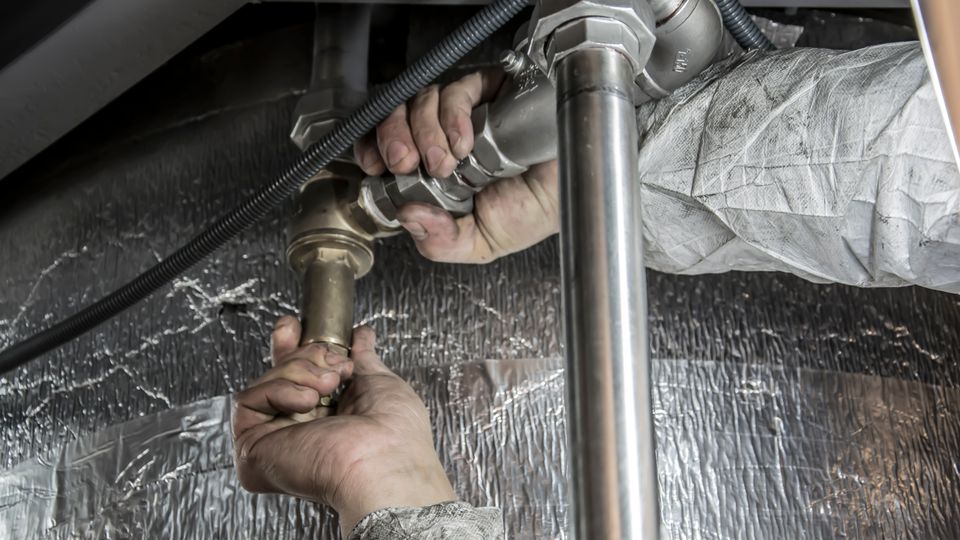
Seized valves are common in 1970s–90s Warsaw stock. Signs:
- Handle spins without resistance
- Drip continues after “full close”
- Corrosion on the tail
Do not hit valves with tools in a panic — snapping the stem opens the flow. Book an English-speaking plumber to replace the valve when the leak is controlled.
Rentals and administrators
Landlords should show you the main on handover. If they did not, ask in writing — it is reasonable due diligence.
When only the riser cupboard will stop the water, you need the zarządca. See building administrator plumbing for how that call works in English.
Practice drill (non-urgent)
Once a quarter:
- Close and reopen each isolator gently
- Confirm the kitchen tap stops when the kitchen isolator closes
- Note any stiff valves for planned maintenance
Pair this with checking dripping taps before they become overnight leaks.
Related guides
- Apartment plumbing anatomy (interactive) — labeled zawór, wodomierz, pion, szacht
- Leaking pipe
- Washing machine leak
- Finding English-speaking help
Bottom line
Water shut-off valve in a Warsaw apartment: find your flat main and under-sink isolators before an emergency. Photograph them, label them, and call for help if water keeps flowing after they are closed.
Request plumbing help in English →
Common questions
Which way closes a water valve in Poland?
Clockwise closes, counter-clockwise opens — same as most European installs. Turn gently; old valves seize if forced.
Can the administrator shut off my water?
Yes, for shared riser work or emergencies affecting multiple flats. They should notify residents when possible.
Should I label my shut-off valves?
A good idea. Masking tape with “kitchen cold” / “flat main” helps housemates and babysitters in an emergency.